Red Hat Enterprise Linux
The Open Source Enterprise Operating System
The world's leading enterprise Linux platform, delivering a stable, secure, and consistent foundation for mission-critical workloads across bare metal, virtual, cloud, and edge environments.

Overview
Red Hat Enterprise Linux (RHEL) is the industry-standard operating system for enterprise IT, built on open source innovation and backed by one of the largest commercial Linux support organizations in the world. RHEL provides a consistent, hardened foundation for running mission-critical applications across physical servers, virtual machines, private and public clouds, and edge devices.
With a predictable release cadence, an extensive hardware and software certification ecosystem, and enterprise-grade lifecycle support, RHEL enables organizations to standardize operations, reduce risk, and modernize infrastructure at their own pace — from traditional workloads to containers and hybrid cloud deployments.
Platform Components
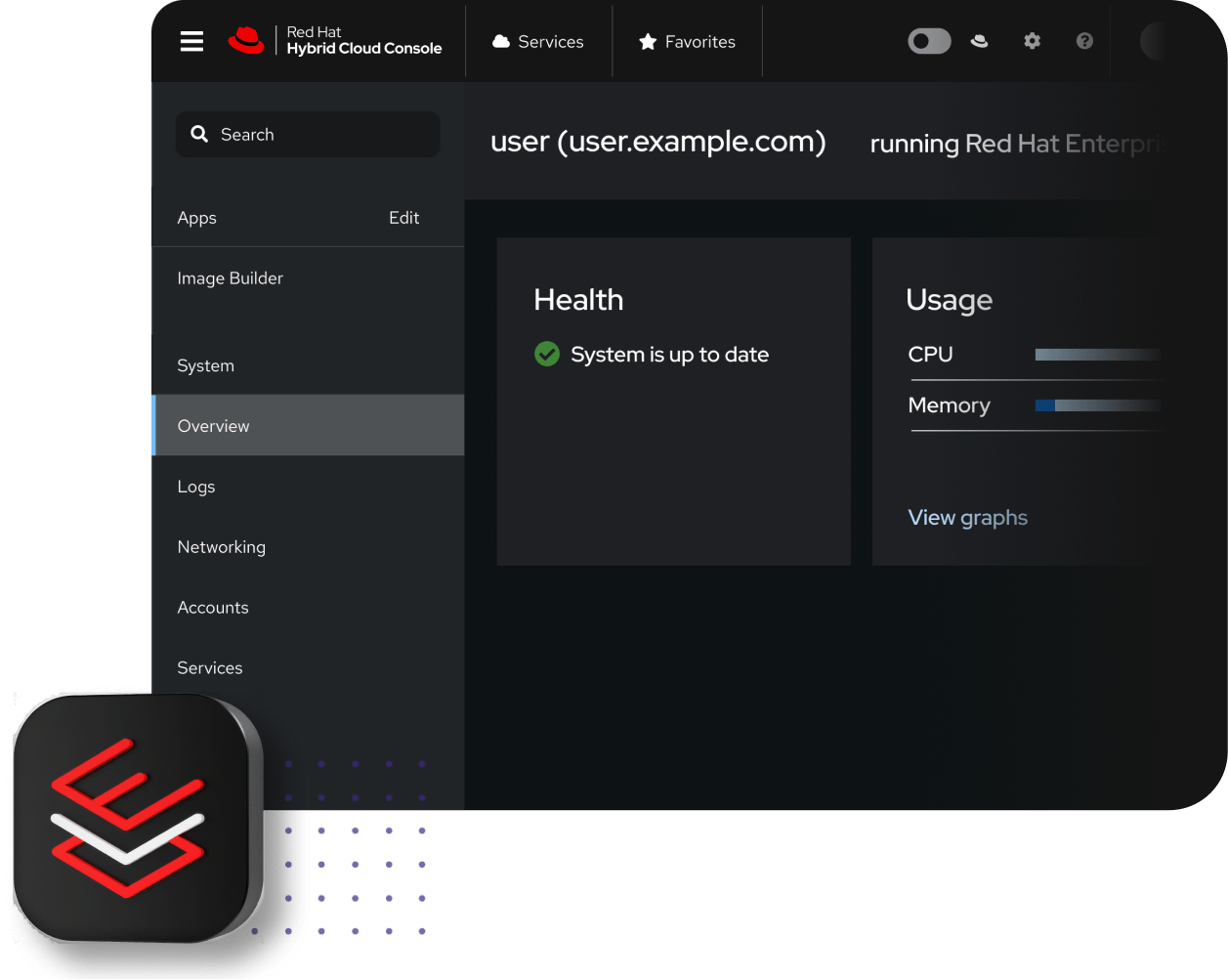
Image Builder
Build consistent, purpose-built OS images.
Red Hat Insights
Predictive analytics for risk and drift.
System Roles
Ansible-based automation content.
Key Features
A hardened, consistent foundation for enterprise infrastructure.
Predictable Lifecycle
Up to 10 years of production support per major version, on a predictable release cadence.
Security & Compliance
SELinux, FIPS 140-validated cryptography, and continuous CVE remediation.
Image Builder
Build and deploy consistent OS images across bare metal, virtual, and cloud.
System Roles & Automation
Ansible-based automation content for configuration management at scale.
Hybrid Cloud Ready
Certified across AWS, Azure, Google Cloud, and major hypervisors.
Application Streams
Multiple versions of user-space components without waiting for major releases.
Certification Ecosystem
The broadest hardware and ISV certification matrix in enterprise Linux.
Red Hat Insights
Proactively identifies security, performance, and stability risks before downtime.
Business Benefits
Reduced Operational Risk
Standardizing on a single, well-supported Linux distribution reduces configuration drift and operational surprises.
Enterprise-Grade Support
Direct access to Red Hat engineering, with defined SLAs and a global support organization.
Consistent Hybrid Cloud Foundation
The same OS and tooling across data center, public cloud, and edge simplifies operations and skills requirements.
Faster, Safer Modernization
A stable base for gradually adopting containers, automation, and cloud-native practices without disrupting existing workloads.
Use Cases
RHEL powers standardized infrastructure across every industry.
Core Enterprise Workloads
Standardized OS foundation for ERP, databases, and business-critical applications.
Hybrid Cloud Platforms
Consistent OS layer underpinning private and public cloud infrastructure.
Regulated & Government Systems
Hardened, certified OS for environments with strict security and compliance requirements.
Edge & Telco Deployments
Lightweight, consistent OS images for distributed edge and network function environments.
Industries
Frequently Asked Questions
Explore Red Hat Enterprise Linux
Learn more about RHEL's lifecycle, security capabilities, and hybrid cloud readiness.